
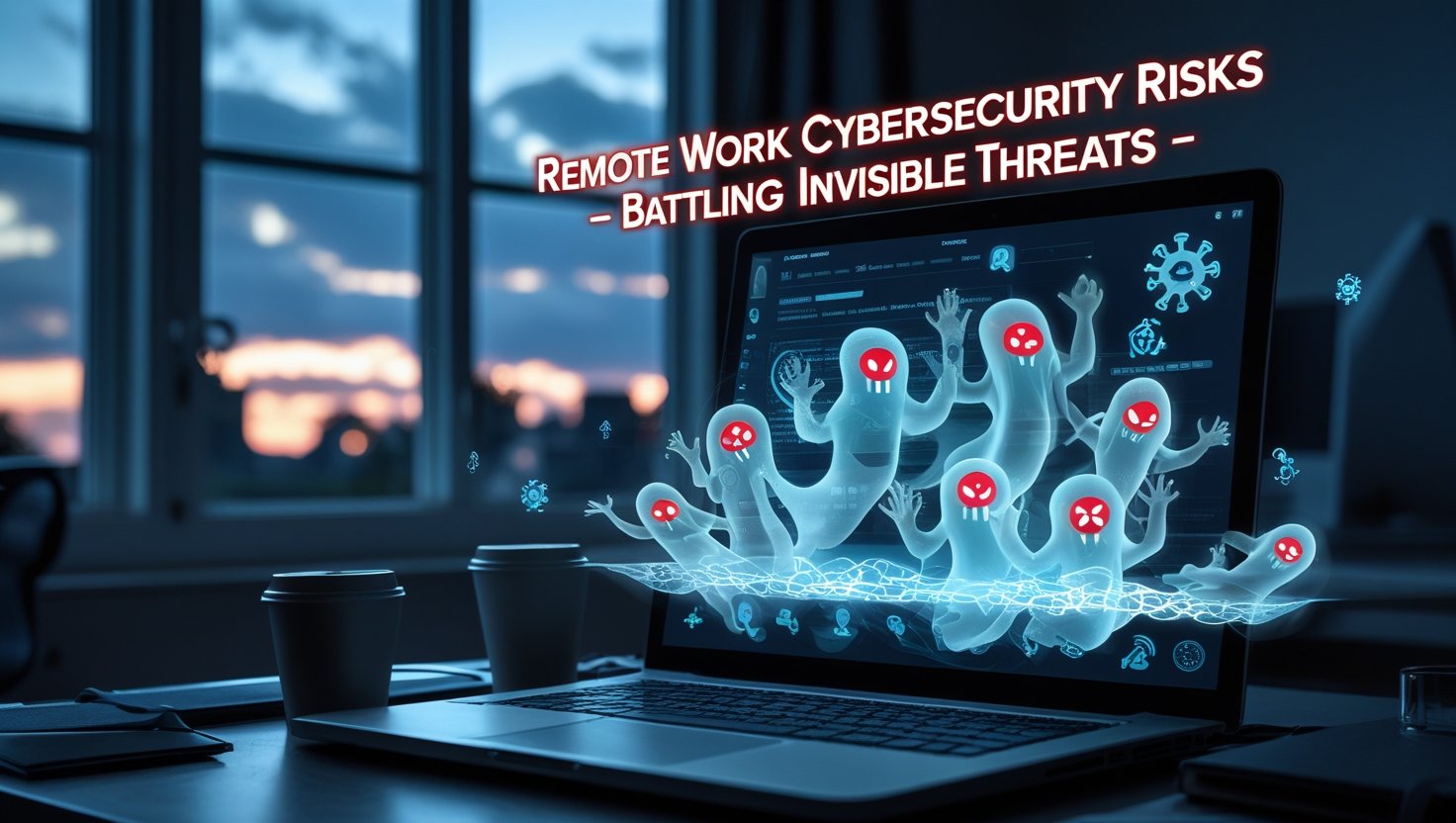
Imagine starting your day only to discover that the convenience of working from home has turned your digital space into a gateway for cyber intrusions. In today’s hyper-connected world, remote work cybersecurity is not just an IT challenge, it’s a business imperative. As organizations embrace the benefits of flexible work, they increasingly face cybersecurity risks that hide in plain sight. This article explores the hidden risks of remote work and provides fresh insights and proactive strategies to safeguard your digital environment while maintaining productivity.
Unraveling Remote Work Cyber Hazards:
The modern work paradigm offers unprecedented freedom, but this newfound flexibility carries inherent dangers. Remote employees, who once reveled in the liberty of setting up their own workspace, now unknowingly open doorways to cyber criminals. Every personal device and unsupervised home network can become an entry point for sophisticated attackers.
Studies reveal that even minor oversights, such as using predictable passwords or neglecting timely software updates, can expose sensitive business data. Hackers actively scour these vulnerabilities, exploiting them to infiltrate networks and harvest confidential information. As a result, the line separating a digital nomad from a digital target often becomes blurred. To counter these challenges, businesses must implement layered security measures that extend beyond the office walls. Training employees to recognize potential traps and investing in advanced remote work cybersecurity protocols can transform your flexible environment into a resilient operational space. Balancing freedom with protection has never been more crucial in this evolving landscape.
When Comfort Meets Cybersecurity Risks:
The allure of a cozy home office can mask significant cyber vulnerabilities. Unlike secure, monitored workplace environments, home networks typically lack the robust defenses provided by corporate IT systems. Employees often rely on standard routers and unsecured Wi-Fi connections, leaving a trail of cybersecurity risks that attackers are all too eager to exploit. Personal devices, be it a smartphone, tablet, or laptop, may not receive regular security updates, making them soft targets for malware, phishing, or ransomware attacks.
This patchwork of security measures can inadvertently extend the risk factor to corporate data when remote connections bridge personal and professional worlds. The solution lies in integrating advanced security practices with everyday routines. Utilizing a Virtual Private Network (VPN), applying strong password protocols, and regularly updating security software can significantly reduce exposure. As businesses reinforce their stance on remote work cybersecurity, empowering employees to secure their digital frontlines becomes a vital part of defending against invisible attacks.
The New Reality of Remote Work Security:
Remote work has given rise to a new breed of adversaries, ones that operate stealthily and strike without warning. Invisible threats such as sophisticated phishing schemes, stealth malware, and targeted ransomware attacks have evolved to exploit the inherent vulnerabilities of decentralized workspaces. These cyber assaults often go unnoticed until significant damage is done, making early detection and rapid response essential. For remote workers, the challenge is twofold: staying productive while remaining vigilant against threats that hide behind everyday emails and routine work sessions.
The key is to shift from reactive defenses to a proactive security strategy. This involves continuous monitoring of network activity, the integration of behavioral analytics to spot anomalies, and the adoption of a zero-trust model that never assumes safety by default. By embracing these forward-thinking tactics, organizations can mitigate the risks posed by cybersecurity risks that creep in unnoticed and maintain a secure environment even when employees are miles away from a centralized office.
Strengthening Your Digital Fortress:
As the lines between office space and home workspace blur, the need to build a robust digital fortress becomes paramount. Organizations must adopt a multi-layered approach that marries cutting-edge technology with practical human practices. Proactive measures start with equipping remote workers with the necessary tools: endpoint protection, secure VPNs, and multi-factor authentication are just the beginning. Equally important is fostering a culture of cybersecurity awareness through regular training sessions and simulated attack drills.
This dual strategy, combining technology with education, ensures that employees understand their role in maintaining security and are prepared to recognize potential threats. Companies should also consider implementing advanced features like real-time threat monitoring, adaptive encryption, and context-aware security protocols. These tools help transform a traditionally passive defense model into an active, responsive system. In doing so, remote work becomes not a liability but a well-fortified extension of the corporate network, where every connection is scrutinized and every potential breach is swiftly neutralized. Building such a digital fortress is not merely about technology; it is about cultivating resilience across every level of the organization.
Why Conventional Firewalls Fall Short in Today’s Home Workspace:
Traditional security measures, such as standard firewalls, have long been the backbone of office IT defenses. However, the migration from centralized offices to decentralized home environments exposes the limitations of these time-tested tools. Home networks are often a mosaic of various devices, smart TVs, IoT appliances, personal laptops, and more, that do not adhere to strict enterprise controls. Conventional firewalls, designed for predictable and controlled environments, fail to adapt to this dynamic reality.
They often lack the sophistication required to detect modern, multi-vector attacks that target vulnerabilities specific to remote work setups. Cybercriminals have honed their strategies to bypass static defenses by exploiting the inherent unpredictability of home networks. The outcome is a security gap that leaves businesses exposed to breaches and data theft. To truly secure remote operations, organizations must extend their protective measures beyond the basic firewall.
Incorporating advanced analytics, behavioral monitoring, and adaptive security protocols can bridge the gap, ensuring every endpoint receives the protection it deserves. This evolution in cyber defense is imperative for keeping pace with the ever-changing tactics of modern hackers.
Adapting to Remote Work Cybersecurity Challenges:
The future of work is digital, and with it comes the evolution of remote work cybersecurity. As technology advances, so do the threats that target our digital lives. Artificial intelligence (AI) and machine learning are beginning to play critical roles in forecasting potential breaches and streamlining threat response. These technologies offer the promise of proactive security by analyzing vast streams of data to pinpoint anomalies before they manifest into full-blown breaches.
Additionally, the adoption of zero-trust architectures is emerging as a leading strategy, ensuring that every access request, regardless of its origin, undergoes rigorous verification. Such innovative approaches are essential as traditional measures struggle to keep up with sophisticated, evolving threats. For businesses, the challenge lies in implementing solutions that not only address current vulnerabilities but also anticipate future risks.
Embracing continuous innovation, investing in AI-driven threat intelligence, and nurturing a culture of security awareness will be crucial. As remote work becomes ever more prevalent, so too must our methods for combating the cybersecurity risks that accompany it, ensuring a secure and resilient digital future for all.
Conclusion:
As remote work becomes integral to modern business, the need for robust cybersecurity has never been more critical. The presence of invisible threats in everyday digital interactions calls for a proactive, innovative approach to defense. By investing in advanced security measures and cultivating a vigilant workforce, businesses can transform vulnerabilities into fortified strengths. In a world where the lines between home and office blur, turning your digital workspace into a secure fortress is essential. Embrace change, innovate continuously, and safeguard your future.
FAQs:
Q1: What is meant by remote work cybersecurity?
It involves protecting data, networks, and devices in remote work settings from cyberattacks.
Q2: What are common cybersecurity risks for remote workers?
Risks include phishing, unsecured home networks, weak passwords, and malware attacks.
Q3: How can remote work setups be made more secure?
Implement strong passwords, VPNs, multi-factor authentication, and keep software updated.
Q4: Why do traditional firewalls not suffice in home workspaces?
They often cannot handle the diverse, uncontrolled devices and networks found in home environments.
Q5: What are invisible threats in remote work?
These are stealth cyberattacks, like phishing schemes and malware, that are hard to detect.
Q6: What proactive measures can build a strong digital fortress?
Using zero-trust models, continuous threat monitoring, advanced encryption, and regular cybersecurity training helps fortify defenses.





Leave a Reply